Culture and Law Moots – paving the way to a more inclusive profession
8th May 2025
As well as co-hosting the Tilé and Olly Meets podcast, ALA member Olamide Kowalik, Special Counsel at Revolution Law and Tilé Imo, lawyer, are co-organisers and sponsors of the Culture and Law Moot in Brisbane for the second year in a row.
With an increased number of attendees building on the success of last year’s event, they tell us how the moot came to life, and give their opinions on the benefits to participants and the legal profession more broadly.
How did the idea of a Culture and Law Moot come about and what were its objectives?
Olamide: Tilé and I, and the co-organisers of the moot, Linda Cho (VP of the Asian Australian Lawyers Association) and the Hon Judge Dzenita Balic of the District Court, all met in collaboration for the Queensland Law Society’s ‘Why Diversity’ event in 2021. After that event, I wanted to build on the momentum and do something that would give back to our communities, and provide an opportunity for them to interact with the judiciary. This was a view shared by Judge Balic. Over a period of time, the concept of the Culture and Law Moot developed; we then took it back to Tilé and Linda, who were excited to come on board.
Tilé: We were already doing our Tilé and Olly Meets podcast which explores and showcases the living experiences of lawyers and justice professionals from diverse backgrounds. As part of formulating the goals of our podcast, we also wanted to contribute to something that showcased diversity in a further tangible way. The moot was a natural segue from our podcast, and also from our involvement with the Queensland African Lawyers Network and the Pasifika Lawyers Association of Queensland (PLAQ). We already had buy-in from our colleagues Linda and Judge Balic, so we felt confident that we could make this work.
What part did you play in its inception and development?
Olamide: It was absolutely a collective effort to put the first moot together. We met a couple of times to plan on TEAMS, we started a WhatsApp group chat, as you do these days, to help us to organise the moot. We came up with the moot topic together for the first year and then it was just a matter of Tilé, Linda and I sourcing teams from our respective associations. Judge Balic was our connection to the judiciary and to obtaining permission to utilise the Banco Court. Linda helped organise the certificates and managed the registrations to the event. I used my connections to find the catering. Tilé was instrumental in turning ideas into reality by mobilising the mooting teams and debriefing the mooters. He also helped to secure funding from the Queensland Law Society and Tilé and I both contributed financially as well.
Tilé: This year, Linda moved to Melbourne. But we were very fortunate to have Reimen Hii, barrister and current Queensland president of the Asian Australian Lawyers Association join us with the same energy to get this year’s moot underway. Some of the organising duties shuffled around but we each contributed our time, energy and finances to this event again to ensure its success. The Queensland Law Society again co-sponsored our moot, and the Bar Association of Queensland provided the prizes for the winning moot team.
Olamide: We had several judges join us at last year’s and this year’s moot. We are very grateful for their generosity of time spent with us. I have personally found it fulfilling to work with Judge Balic, for example, her own lived experience means she understands and is open to cultural nuance and approaches which makes collaborating in this space so easy.
The first moot was very successful – what did you to take forward into the design of this year’s moot?
Tilé: You know, it’s felt very rewarding. Mooters have told me that it was life-changing and an event they will remember for a very long time. It was the confidence they had after participating in the moot to pursue other career activities and to step into their advocacy role as lawyers. I think that’s really powerful. If the first moot taught us anything, it’s that we had proof of concept, that people wanted to attend and participate and engage in these larger events. This year we had about 207 registrations, and the maximum capacity for the courtroom is 215. We had around 150 people last year in the same room, so it shows increasing interest. Another thing we learned is that the topics chosen for the moot are broad so it allows for such interesting and creative arguments. Last year’s topic was Does culture have a role to play in advocacy? The moot judges loved how different and compelling each team’s argument was, and we loved to watch it in action too.
How was this year’s moot?
Olamide: I would say it was a success overall, similar to last year’s, but with an uptick in interest. This year’s topic was probably more challenging than last year's – our colleague Sheetal Deo, also part of the 2021 ‘Why diversity’ event, came up with it: The Australian legal system is an effective tool to address the intersectionality of discrimination. As with last year, the mooters all had unique arguments. The moot judges always give great constructive feedback about their presentation and argument. A key takeaway from both years is this comment from Chief Justice Helen Bowskill: ‘being the loudest advocate doesn’t mean you are the best advocate’.
Tilé: Last year, the Asian Australian Lawyers Association team won. This year, the Queensland African Lawyers Association team won. I have always been thoroughly impressed by the ability of our mooters to stand before superior court judges and present their argument. The Chief Justice of the Supreme Court of Queensland has overseen the moot both years with two other judges. I was so pleased to have two students from PLAQ come up to me after this year’s moot and say they would love to be coached for next year’s moot. I had not even thought about next year yet, but it would be great to see the moot come back again for a third year.
How does a moot of this type benefit the wider legal profession?
Tilé: The moot topics explore broad, thought-provoking questions that invite reflection on our legal practice, including themes like culture, advocacy, intersectionality, and justice. The moot judges also encouraged attendees to consider how we engage with these issues as legal practitioners. Last year, our colleagues at the Pacific Legal Network of NSW were inspired to replicate our moot, and collaborated with six other diverse legal associations in NSW and their own judges to deliver it. I would love to see this initiative expand to other states too to inspire confidence in our profession's future thought leaders.
Olamide: The moot positively connects diverse community groups with the courts. It demystifies what it is to interact with the courts and receive feedback. Family, friends, and colleagues can share in this experience by attending the moot.
Further, there is no barrier to entry to be part of the moot, we always have a fourth team that is open to anyone. Last year, we had two volunteer students put their hands up to participate, and this year, we had two members from Queensland Young Lawyers put their hands up to participate. It is open to law students, early career lawyers or barristers, legal academics etc. Lawyers who may not have been exposed to these topics should attend these types of events to have the opportunity to think about and be part of these important conversations. Twenty-two years ago, when I started in the profession, you would not hear conversations about culture or intersectionality, so we cannot stress enough the value of events like the Culture and Law Moot.
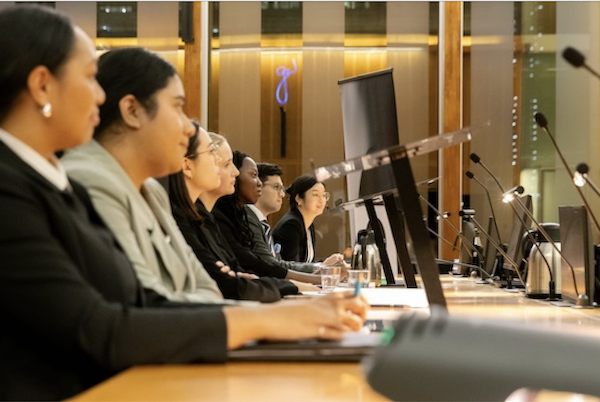
Mooters receive judges' feedback. Culture and Law Moot 2025.
The ALA thanks Olamide Kowalik and Tilé Imo for this contribution.
The views and opinions expressed in this article are the authors and do not necessarily represent the views and opinions of the Australian Lawyers Alliance.
Learn how you can get involved and contribute an article.